The UK's Attitude Towards Its Cryptoasset Regime
The world is currently undergoing a Cambrian explosion of technological innovation. U.S. business applications jumped 50-100% post-2020 to over 5 million annually, while Y combinator, Silicon Valley's leading startup accelerator, reported increases in applications of around 2.5x in the last few years, increasing the size of batches to accommodate. The rate of change of innovation is also accelerating, as evidenced by the speed of adoption of novel technologies. For example, it took around 7 years for the internet to reach mass market adoption. Now, ChatGPT scaled to 100 million monthly users within 2 months, while Anthropic has gone from $1bn to $50bn+ in run rate revenue in just 18 months. AI drastically lowers the cost and barriers of entry to starting a business, which will only intensify this trend.
Given this, and that we are perhaps at the turn of the fourth industrial revolution, with advances in AI, robotics, biotech, crypto all converging at once, are the institutions designed to protect their people as well as foster these emerging technologies for the benefit of said people fit for purpose? How can bloated regulatory bodies keep up with this rapid pace of change? What can the UK learn from the US in this regard? This article seeks to answer these questions, with a specific focus on the oncoming cryptoasset regime, with the help of an interview from Dan Spuller, EVP at the Blockchain Association, the leading industry voice in DC. It also argues that, although the UK will likely end up with a satisfactory regime, it has missed the proverbial forest for the trees, akin to pouring resources into winning the battle, without realising it has already lost the war.
The UK has taken a deliberative, consultative approach, with the full Cryptoasset regime coming into force in October 2027, with applications for firms open on 1st October 2026. Since inception of the proposal in 2022, the UK policy apparatus, including the Treasury (HMT), the FCA and the Bank of England, has undertaken 16 consultation and discussion papers in total, with each one taking around 6-12 months from the request for evidence to final proposals.
Many have criticised the UK's consultative approach for being too slow, and indeed 5 years from inception to practice is a long time, particularly in the rapidly evolving world described above. On this, Dan Spuller says the following:
Time matters. In technology policy, delay is not neutral. The risk is not simply that firms physically leave Britain. The risk is that the next generation of digital asset infrastructure gets built somewhere else entirely. Capital, talent, and infrastructure formation move toward jurisdictions where serious firms can operate with confidence.
In an ideal world, a jurisdiction produces the highest quality regime (balancing consumer protection and innovation) as quickly as possible. In reality, there is a tradeoff between the two.
A more rigorous but slower approach does have its advantages. The first is depth. As Spuller notes, "the FCA's technical engagement with these products is, in many respects, stronger than what the U.S. had during the enforcement era." Being able to get in-depth commentary from firms operating live in the space, as well as alternative views from incumbents, politicians and users is an invaluable asset. It allows regulators to aggregate the entire universe of opinions and make weighted judgements.
The second is simply that the market matures over time, and it is easier to regulate a mature market than a nascent one - given the antics of the 2009-2020 crypto era, it is perhaps unsurprising that Gary Gensler's SEC operated its regime of "enforcement" over "rule-making". In this regard, it is useful when regulators have a deep understanding of the technology and thus can foresee its potential.
The question still remains: is it really necessary to wait 5 full years to instate a regime?
On this point, as well as the expertise point, the UK would do well to look to the US, although it is worth prefacing that, with regulation, comparison is not necessarily useful, since a country's circumstances and positioning is unique. Moreover, the legal setup and regulatory apparatus are different in both cases. However, methodologically, there is always room for improvement and inspiration.
Both the CFTC and the SEC have instated 'task forces', with the SEC creating a Crypto Task Force, and the CFTC creating an innovation task force responsible for crypto, AI and prediction markets legislation. These operate as lean, 'startup-style' teams with deep legal, regulatory and, crucially, industry experience. Michael Selig, CFTC chair, started his career with the CFTC, before becoming partner at a lawfirm, where he served clients primarily focused on the cryptocurrency space. He then worked for the SEC Crypto Task Force before becoming CFTC chair. Similarly, Mike Passalacqua, head of the innovation task force, worked in the regulatory practice, with a focus on crypto assets, at Simpson Thatcher & Bartlett LLP. Taylor Lindman, now Chief Counsel of the SEC Crypto Task Force, was Deputy General Counsel at Chainlink, one of crypto's leading protocols.
The key point here is that those making the key regulatory decisions have deep industry understanding, meaning not only that they understand the benefits of the technology, and therefore will be unlikely to stifle innovation, but also that they can better engage with industry and ultimately create more comprehensive rules. There is also a certain youthfulness present across the highest rungs of these taskforces, which perhaps lends itself well to a more startup-style approach to regulation. The proof is indeed in the pudding - while the UK still has over a year until the regulation comes into force, the GENIUS Act has already been signed into law and the CFTC recently permitted the onshoring and listing of a perpetual futures contract in a landmark authorisation. This was the first permission of a new type of derivatives contract in over a decade.
The inspiration for this article came after meeting both Taylor Lindman and Mike Passalacqua in person, who knew as much as, if not more, about the current crypto landscape than me or the other students in the room. The same can not be said having met regulators in the UK. Colin Payne, who leads the FCA's Innovation Branch, has no direct expertise when it comes to blockchain, AI or prediction markets.
While the UK pioneers in regulatory sandboxes, which Spuller notes as a "structural advantage", and has introduced ideas such as the "stablecoin sprint" event, bringing together industry and regulators for an intense week of discussion on stablecoins, one cannot help but wonder whether a leaner, more ambitious operational core, with deeper expertise, may lend itself to faster, yet equally comprehensive regulation. Indeed, while the US constructs teams combining deep legal and industry knowledge, the UK could take this one step further, bringing in elite technical talent not only to help rule-make, but also to automate the ongoing regulatory work, including disclosures, filing analysis, AML and KYC responsibilities.
Regulation is also not an even playing field. The USA can afford to be 'slower', since it is the unequivocal tech-powerhouse, dwarfing the rest of the competition. The UK market, by comparison, is sizably smaller.
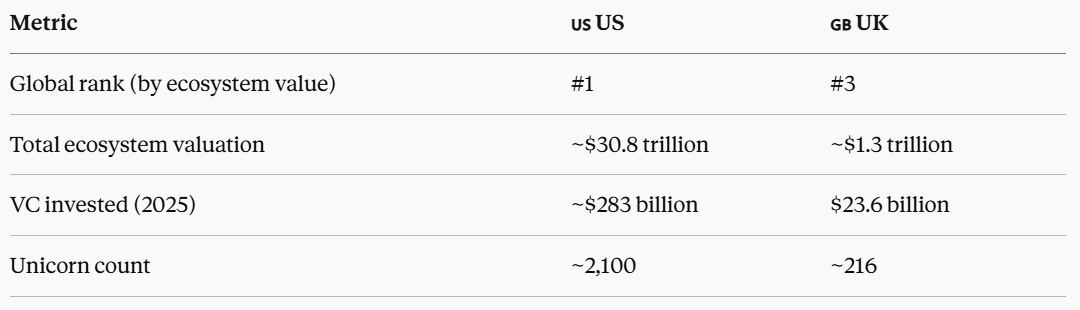
The UK, one would assume given this positioning, would perhaps seek to lure capital and talent away from larger markets by making their regime more innovation-friendly, or at least bringing in concrete rules and guidelines faster than their counterparts. The opposite somehow appears to be true. The arrogance from regulators to even propose rules such as the Bank of England's cap on issuance shows an ignorance towards both the potential of the technology and the UK's market position.
Yes, the UK is still the third largest tech centre. Yes, the UK is still a large economy. And Yes, the UK will likely end up with a comprehensive cryptoasset regime. But where is the drive to proactively stake a claim in emerging tech?
When Christopher Columbus set sail in 1492, or when European powers raced to chart the globe, the objective was to explore unchartered territory and lay claim to untouched pastures before anyone else did. Similarly, during the Space Race, the United States and the Soviet Union competed to be the first to plant a flag on the moon, and metaphorically a claim on the whole of space. The same pattern repeats across history, from the California gold rush to Rockefeller and the early oil barons.
Power, wealth, and strategic dominance have flowed to those who recognized a new frontier early and possessed the ambition to explore it. Technology is merely the latest iteration in this tradition.
And the US is winning the war. Consider how the average person interacts with the digital world - open up an iPhone (US-Company), which runs on US designed chips, open up google (US Company), open up Instagram (US Company) or X (US Company) or Tiktok (now majority US-owned) or Netflix (US Company). Indeed, the US controls almost all the major digital assets influencing algorithms, and by extension, culture. And this export of culture has tangible effects. For example, a study found that due to heavy social media use, roughly 16-17% of German vocabulary now consists of anglicisms. Or take Black Friday, an artifact of American Retail consumerism around Thanksgiving, which is now observed in over 50% of countries worldwide, due to Amazon and other US retailers large distribution overseas. These are behavioural changes rooted in cultural change.
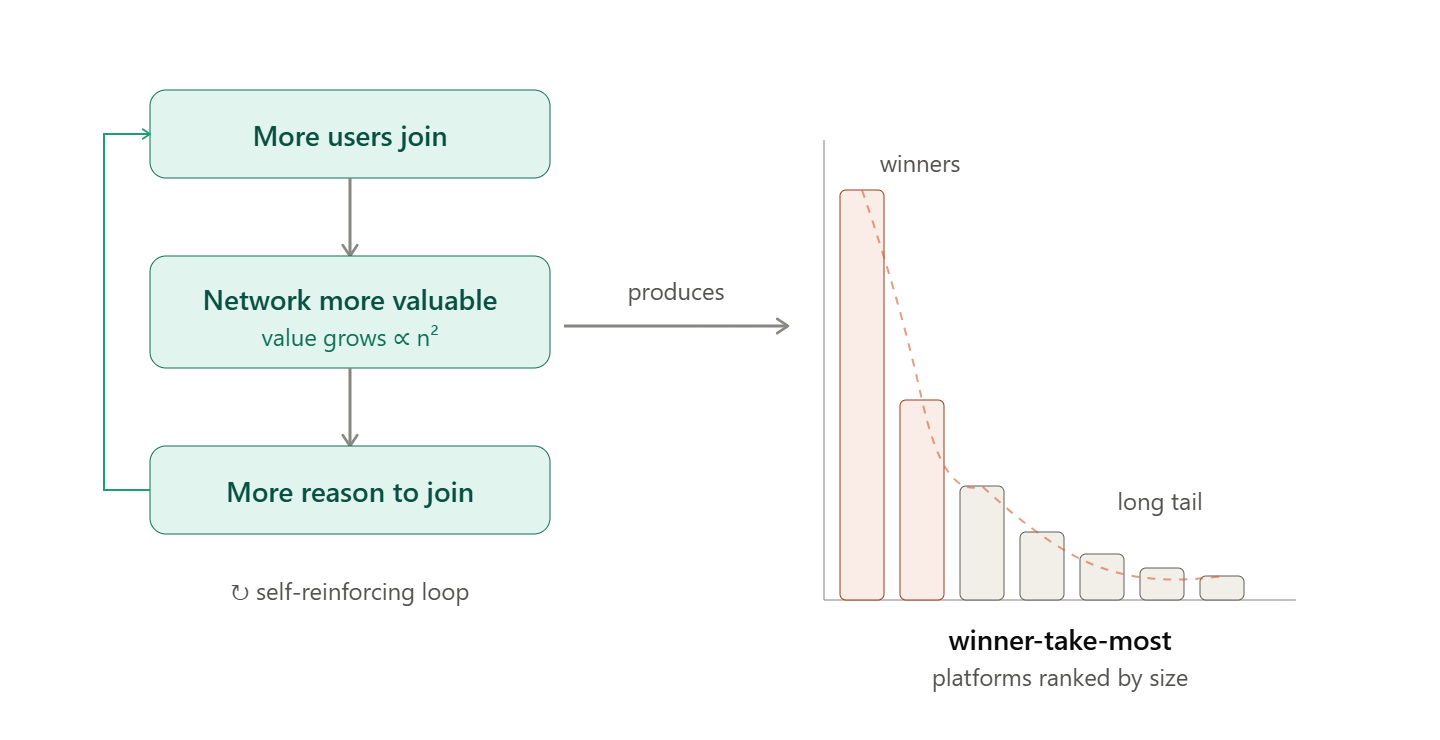
How was this possible? The internet, being an open network, is accessible by design to anyone with an internet connection. Social media platforms built on top naturally have such distribution. Social networks are also subject to power-laws, which is why there are only a handful of top platforms that display network effects.
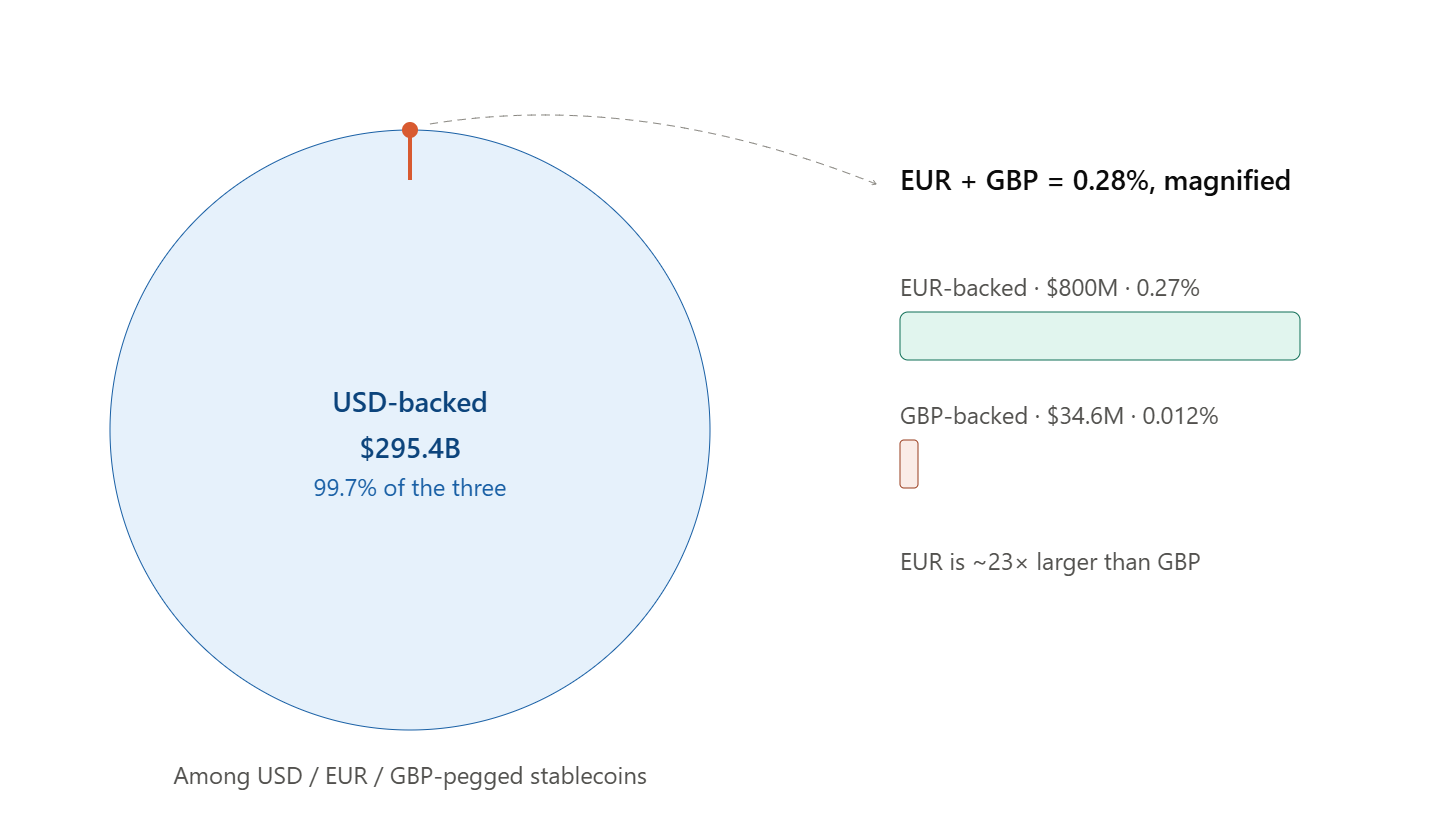
Blockchain technology is an open network for financial services. Like the internet, the blockchain is accessible to anyone with an internet connection. And once again, the US is winning, with the USD having become the de facto settlement asset and US companies overarchingly dominating key infrastructure. Power laws are similarly at play. The market share of USD vs other stablecoins still sits at >99%. GBP stablecoins sit at a mere 0.012% of total market cap.
Just as with social media and the internet, it is difficult to say whether this is inherently 'good' or 'bad'. On the one hand, a merchant in Turkey whose currency depreciates quicker than they can sell goods suddenly has access to a stable currency, reliable yield and, with the oncoming wave of tokenization, high quality assets such as the S&P500. Why do you think Blackrock's Larry Fink went from being anti-crypto to pro-tokenisation? The TAM is expanding for financial companies. And for people with no access to financial products or banking services, this is a genuine improvement.
On the other hand, it spreads US influence, as well as diminishes autonomy of regional governments. And given Washington's crushing $34tn debt issue, it seems they have found a solution just in time. Because major stablecoin issuers back their digital dollars primarily with short-term US Treasury bills, every foreign citizen holding USDT or USDC in developing nations becomes an un-syndicated micro-lender to the US government. The US is effectively funding its domestic deficit by exporting digital dollar rails to the rest of the world. This is happening already - Tether CEO Paulo Ardoino stated that Tether is already serving 550 million customers in emerging markets.
Two questions remain unanswered. Why is it that the US is in this position? And what are the ramifications of the UK? First of all, it would be incorrect to say that there is some hidden hand dictating resources towards new and unexplored domains. Rather, the US has a highly ambitious culture, the kind of culture that can produce Silicon Valley. The 'American Dream' may be cliché, but it is indicative of the American cultural ideal - that failure is acceptable if it is in pursuit of a better life for your family. Downstream of this, in a flywheel effect, the US also has the deepest capital markets on earth, as well as elite talent. Many regions have the latter two, but lack the cultural headwind to capitalise.
Now, it is preposterous to assume that if the UK had staked a claim on blockspace early, GBP stablecoins would be the settlement layer. The USD won blockchain rails for obvious reasons - it is the reserve currency of the world following Bretton Woods and later the Petrodollar agreement. Blockchain, arguably, is the third evolution in this wheel, tapping into retail, direct to consumer dollarization in hard-to-reach areas.
Britain was not always this passive. During the Industrial Revolution, the UK built power by laying 70% of the world's subsea telegraph cables, establishing the Gold Standard, and underwriting global maritime trade, via Lloyds of London. It understood at that time that owning and exporting the rails was powerful.
It is clear that at the highest levels of government there is little ambition, little vision, little foresight. The attitude towards this cryptoasset regime is evidence of this, spending years building a regime without realising that we have all but missed the boat. When did we become content with mediocrity? As Dan Spuller notes, "consultation is a virtue when it leads to decisions. It becomes a liability when it becomes a substitution for execution."