The Machine Stops. Or Does It?
"Oh, tomorrow — some fool will start the Machine again, tomorrow." "Never", said Kuno, "never. Humanity has learnt its lesson." — E.M Forster, The Machine Stops. 1909.
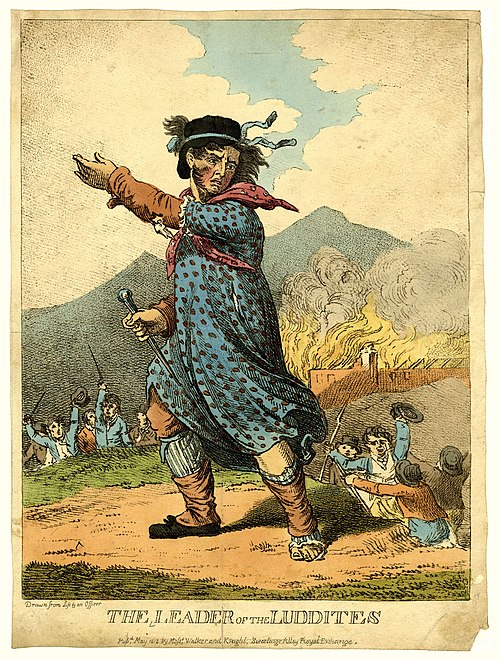
The human fear of being displaced by technology is one that dates back centuries. In 1779, in a small village named Anstey, near Leicester in England, Ned Ludd, a skilled weaver, smashed two stocking frames after being criticised and instructed to change his method. By 1812, organised raids involving the destruction of such frames spread rapidly across England, with the perpetrators calling themselves Luddites after their mythic leader.
The development of new cotton spinning technologies meant that textiles could be produced more quickly and cheaply, leaving many contemporary weavers unemployed, angry and violent. In a similar vein, on the night of April 24, 1907, New York's lamplighters left the lights out and went on strike. The 25,000 gaslights that normally kept the streets of Manhattan bright at night were never lit. Thousands of impatient New Yorkers complained to the police but to minimal effect. Those who became lamplighters that year were unlucky. Their profession was almost half a millennium old, but it would soon become a distant memory.
Thomas Edison's invention of the light bulb unquestionably made the world more efficient. But from the viewpoint of the lamplighters themselves, who lost their livelihoods, nothing could be more natural than resistance. Indeed, when the municipality of Verviers in Belgium announced the switch to electricity, lamplighters smashed the electric lamps in fear of losing their jobs.
These stories, though old, are still relevant today, as artificial intelligence, robotics and biotechnology threaten to fundamentally rejig the very fabric of society as we know it. So, as AI automates away swathes of white collar work, are we destined to be figuratively, or indeed literally, ground up into dog food like the horses of the 19th Century, as Thiccy pessimistically suggests? Or are the current trends of political polarisation and increasing inequality merely par for the course?
The industrial revolutions of the past have ushered in periods of immense change. Not just technologically, but also politically, culturally and structurally. Before the first industrial revolution, up to 85% of the population in Europe was employed in agriculture, and an additional fraction worked as craftsman in small workshops. By the early 20th century, only 30-40% of the population still worked in agriculture, while the proportion of industrial and factory workers rose from practically zero to as much as 50%. Society shifted from an agrarian and artisan-based structure to an industrial class society, with a working class, urban bourgeoisie and capital owners.
In this process, the average number of children per family was halved, as children could no longer be used as labour (with child labour increasingly outlawed), and rather came to represent real economic burdens on parents. This had profound structural effects on family makeup, which in turn had ripple-effects throughout the generations.
Industrialisation also altered working conditions. Low wages and mass rural-urban migration led to overcrowded urban neighbourhoods, poor hygiene, and slums. Urbanisation, coupled with inadequate nutrition, insufficient medical care, and recurring epidemics, created immense social costs. Paradoxically, output per worker expanded by 46% between 1770 and 1840. However, the gains from growth didn't find their way into the pockets of ordinary people. Real wages were stagnant or even falling for those in the lower ranks of the income distribution, as the jobs of adult craftsmen were replaced by machines and children who were working in the factories. The living-standard crisis of the industrial revolution famously led Friedrich Engels to conclude that the machine-owning industrialists "grew rich on the misery of the mass of wage earners."
Sound familiar? Much like the industrial revolution, workers today are no longer reaping the gains of progress. The age of advanced robotics has meant diminishing opportunities for the middle class. Up until the 1980s, manufacturing jobs allowed ordinary working men to obtain a middle-class lifestyle without attending college.
In the U.S., wages for unskilled men have fallen steadily since the manufacturing employment peak of 1979, inflation-adjusted. As manufacturing jobs have disappeared due to robotics, social problems and dissatisfaction have risen in affected areas. Unsurprisingly, like during the industrial revolution, the losers to technology are demanding change. In fact, in communities where robots had impacted manufacturing more extensively, Trump's populist campaign made the largest political gains.
Indeed, Trump, and populism more generally, is part and parcel of a multitude of secular headwinds, akin to similar periods in history. For the average person in 2025, university degrees are practically worthless (the employment rate for people with degrees vs without is roughly the same), living costs are at record levels and the fundamental promise of a stable, middle-class existence in exchange for playing by the rules has evaporated, replaced by a palpable sense of precarity. In fact, the rules themselves are shifting in real-time. It is this sense of precarity that is driving severe political polarization, which is also a result of inequality driven by modern monetary policy.
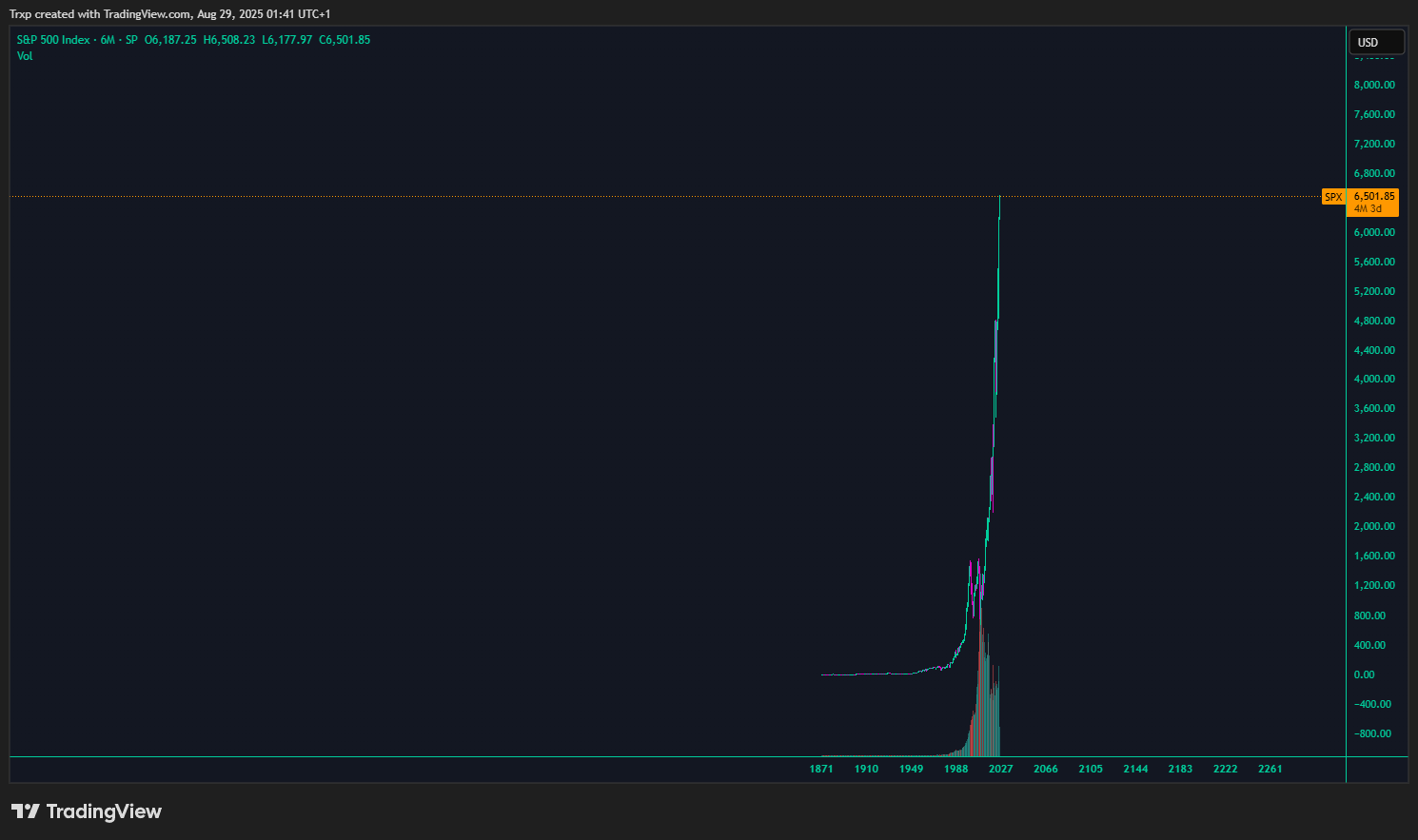
Due to the relationship between debt, market liquidity driven by FED policy and assets, those who have owned assets, whether it be stocks, real estate or equity, in the last 50 years have accrued vastly more wealth than those who have not. The latter feel disenfranchised with the system, and the gap between asset haves vs have-nots is only due to grow in the coming years. This is the reason figures such as Gary's Economics and the new NY mayor Zohran Mamdani have gained traction, and indeed socialism is a political trend that will only grow as inequality rises. The world feels particularly frenzied and crazy at this very moment in time, and it is clear a much deeper structural shift is underway.
As mentioned, this is nothing new. While a deeper structural shift may be underway, the behaviour that has underpinned shifts of this nature remains similar. The industrial revolution created vast inequalities, triggered profound social displacement, and ushered in urbanisation at the cost of village communities. Many people experienced a sense of dehumanisation, working in factories where they came to feel themselves as little more than machines. The concept of childhood was redefined, and new social classes emerged - bourgeoise and proletariat. And yet, despite all this, the 20th century brought with it unprecedented progress in wealth and living standards.
Although I have been an LLM sceptic, I am now more convinced that AI will take-over white collar work. Not least because when human capital and ambition align, betting against such a combination is a losing strategy (e.g the Nuclear Arms Race, Space Race etc). Dean Ball, senior policy advisor for AI and emerging technology at the White House, "expects that a significant, maybe even overwhelming, majority of the intelligent actions in the world (the kind we currently associate with humans) will be performed by computers".
History foretells that there will be many losers, and there will be a few big winners in the short term. So what's in store over the coming decades? The extent to which people lose will no doubt affect the severity of the current and coming secular headwinds. Socialism, civic unrest, political polarization, centralization of power and with it spiralling inequality will underpin this shift. An economic expression of this could be 'secular inflation', as Kem Carsan describes it. Best case scenario is an overhaul of the benefits system and a 'soft landing' in the form of UBI (although UBI has its own issues) for the average person. Worst case is global war and land-grabbing.
Just as the lamplighters, who once had a noble and secure livelihood, were ruthlessly displaced, so too will professions considered 'secure' today - lawyers, doctors, accountants, analysts and so forth - be replaced. These people will not let their livelihoods be stripped away easily. And indeed the shift may take decades - certainly LLMs in their current form have not lived up to expectations, while AI and tech valuations look to be in a bubble. But how best to navigate this stormy outlook for someone entering work?
Obtaining capital is useful in structural shifts. It allows one bargaining power amid the political system losing its grips on control. The great to and fro of capitalism is the generational pendulum swings between public and private, for private innovation drives the technological progress that shatters old social orders and consolidates power faster than the state can react, creating the unrest that eventually fuels the pendulum's swing back toward public intervention. Indeed, the flourishing of the 20th Century following the previous industrial revolution was only enabled by policy makers. So, capital is useful and the best way to obtain this currently is by investing in or building companies in emerging technological markets - crypto, AI, biotech.
However, capital is not to be worshipped. To quote Mark Fisher, "capital is a dark potentiality which haunted all previous social systems [...] that primitive and feudal societies warded off in advance". Greed is an innate human sin. It is necessary to never stray too far into greed and excess. On the other hand, creative careers are not going anywhere. AI cannot reproduce human to human connection, whether it be through art, music or literature. In fact, a cultural revolution and pushback towards the arts is likely - the industrial revolution spurred on the enlightenment, one of the greatest creative and artistic periods ever, which paved the ways for much of the culture that exists today.
Returning to the original point, these creative periods are usually ushered in by disenchantment at being displaced by the machine. We become more aligned with nature again, smaller tight knit communities form and a search for purpose replaces the pursuit of productivity. And the non-'creative' careers that emerge probably include some mixture of ideation, imagination, creation, generation or distribution - qualities that, for now, at least, remain unique to the human condition.
So, the machine does not stop. AI will usher in the fourth industrial revolution. And I would bet that this time is ultimately not different. And that the machine does not self implode but rather continues marching on. We will not be turned into dog food and we will not be rendered extinct by AI. New labour market sectors will arise and humans will continue to be valuable. However, the current cultural, political and economic climate is, as history has shown, the normal irrational human response to change. While Forster's The Machine Stops is, to an extent, evidence of this innate human irrational response to change, it is also a reminder that it is only when humanity veers too close to the machine, as Icarus flew too close to the sun, that we fully rediscover our humanity.
"We have come back to our own. We die, but we have recaptured life" — E.M Forster, The Machine Stops. 1909.
References
- x.com/thiccyth0t
- x.com/apewoodx
- substack.com/@daveshap
- Robots and the political gains of populism — Oxford Review of Economic Policy
- OsloMet — What the Industrial Revolution teaches about today's technological revolution
- Where We Are Headed — Hyperdimensional
- Where We Are Headed, Part II — Hyperdimensional