Is Decentralised Science the Solution?
How the Misalignment of Incentives is Sabotaging Scientific Progress: Is Decentralised Science the Solution?
Abstract
Systemic incentive misalignments within traditional science inhibit progress across research funding, knowledge dissemination, and the translation of discoveries, causing inefficiencies, biases, and restricted access. This review critically analyses these issues and evaluates Decentralised Science (DeSci) as a transformative solution. DeSci proposes to realign these incentives through blockchain technology, Decentralised Autonomous Organisations (DAOs), and token economics, offering novel models for democratised funding (e.g. VitaDAO), open-access publishing (e.g. ResearchHub), and streamlined intellectual property management via IP-NFTs. While presenting promising frameworks to address long-standing challenges, DeSci faces significant hurdles. These include robust DAO governance, crypto-asset volatility, regulatory uncertainties, and adoption barriers. The potential of DeSci, therefore, depends on effectively addressing these pitfalls by ensuring DeSci's incentives align with the greater goal of scientific progress.
Introduction
From the discovery of DNA to the unearthing of electricity, science is the engine of human progress; yet, paradoxically, the very structures designed to accelerate science now inhibit progress. The misalignment of incentives undermines the efficacy of research funding, knowledge dissemination, and the translation of scientific discoveries into mainstream use.
This misalignment pervades research funding; rather than direct scientific output, the system incentivises peripheral activities. For example, researchers dedicate substantial time to administrative tasks, particularly grant writing, because grant success is a primary currency for academic prestige, institutional standing, and continued laboratory operation (Herbert et al., 2013). This focus can also lead to biased allocation, with funding bodies sometimes favouring established researchers or institutions, or less risky, incremental projects over potentially transformative novel ideas (Bol et al., 2018).
Similarly, in scholarly publishing, incentives are skewed towards publication in high-impact, often paywalled, journals such as Nature, as a key metric for career progression. This has created an oligopolistic market dominated by a few large publishers, restricting access to publicly funded research (Larivière et al., 2015). The pressure to publish can, in turn, contribute to detrimental outcomes such as the replication crisis and, in extreme cases, research fraud, because researchers are incentivised to meet the perceived demand from these journals for novel, positive results.
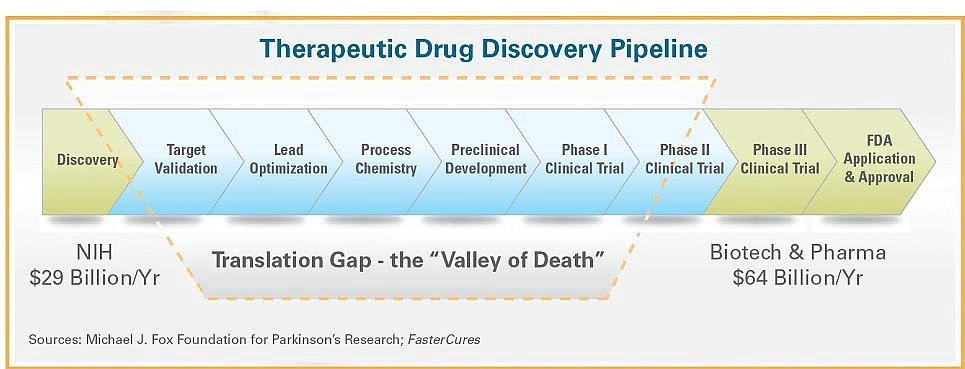
Furthermore, the translation of basic scientific discoveries into practical applications is frequently stymied by the "valley of death." This gap persists, in part, because academic reward systems - driven by metrics like publication counts in high-impact journals and grant acquisition for basic research - often undervalue the complex, time-consuming, and sometimes less-cited work of translational science (Butler, 2008; Seyhan, 2019; Qing Ke, 2019). This effectively disincentivises the crucial bridge-building between laboratory findings and real-world solutions.
In response to these deeply rooted incentive misalignments, Decentralised Science (DeSci) has emerged. Utilising blockchain technology, Decentralised Autonomous Organisations (DAOs), and token economics. DeSci is not merely a collection of novel tools, but rather a concerted attempt to fundamentally realign the incentives within the scientific ecosystem. It proposes alternative models for funding, collaboration, publication, and intellectual property management, aiming to foster a more efficient, open, and impactful scientific enterprise. This report critically evaluates incentive misalignments within traditional science and analyses DeSci's potential in realigning these incentives by examining their potential to address long-standing challenges and the risks associated with these nascent approaches.
Section 1: Funding
Funding is the cornerstone of all scientific progress and experimentation. Without funding, trials would not take place, and scientists would not be paid. Yet, the incentive structures embedded within traditional science frequently cultivate a culture of inefficiency and bias, diverting resources and researchers' attention away from the science itself. These misalignments start from the very beginning of the funding process.
Researchers dedicate a disproportionate amount of time to administrative tasks, particularly writing grants, rather than to direct discovery. A report from Australia's National Health and Medical Research Council found that the preparation of proposals for a single grant round consumed an estimated 550 working years, translating into approximately $41 million in salary costs with a success rate of only 21% for these arduously crafted proposals (Herbert et al., 2013). This administrative load persists because the system itself incentivises such bureaucracy: grant acquisition is a primary metric for academic success, institutional prestige, and thereby the continued operational viability of laboratories. Consequently, a time-consuming application process is normalised, leading to extensive delays and resource diversions that directly undermine the capacity for rapid scientific progress.
Beyond sheer inefficiency, the current funding ecosystem is frequently criticised for being biased, which has further knock-on effects on the misdirection of resources and the stifling of innovation. As mentioned, the skewed incentive structure often favours those with prestige (researchers, institutions), creating a Matthew effect whereby those who already possess resources and recognition are more likely to receive further support (Bol et al., 2018). This systemically perpetuated preference inadvertently penalises novel, high-risk-high-reward research, which may struggle to gain traction against more incremental proposals emanating from well-established figures in familiar fields (Azoulay et al., 2011). A famous example is the discovery of CRISPR in the 1990s by researchers at the University of Alicante, which, due to the novelty (among other biological reasons), was repeatedly rejected by journals until it was finally published in 2005. Researchers from the University of Alicante finally gained recognition in 2013 when scientists from MIT and Harvard first successfully applied CRISPR-gene editing on human cells. This highlights how biases towards prestigious institutions can hinder scientific progress - imagine what progress may have been made if the CRISPR breakthrough had been published in the 90s?
In response to these issues, DeSci utilises several mechanisms aimed at recalibrating funding incentives to create a more agile, transparent and meritocratic system for resource allocation. Key among these are Decentralised Autonomous Organisations (DAOs), exemplified by platforms such as VitaDAO, which funds longevity research, and Athena DAO, which advances women's health research. DAOs such as these usually have a treasury from which funding is drawn. They facilitate community-driven voting on funding proposals, aiming to reduce institutional bias and expedite decisions by shifting power from overly centralised committees. VitaDAO is the largest DeSci DAO; it has a community of approximately 10,000 members, with 2,000 individuals holding the governance token with which votes are cast (Lukacs et al., 2023). To date, VitaDAO has successfully raised in excess of $10 million, a portion of which originates from Pfizer Ventures, a traditional pharmaceutical sector entity. Although this may call into question the supposed decentralisation within these systems, DAOs have taken steps to address issues such as plutocracy (ibid).
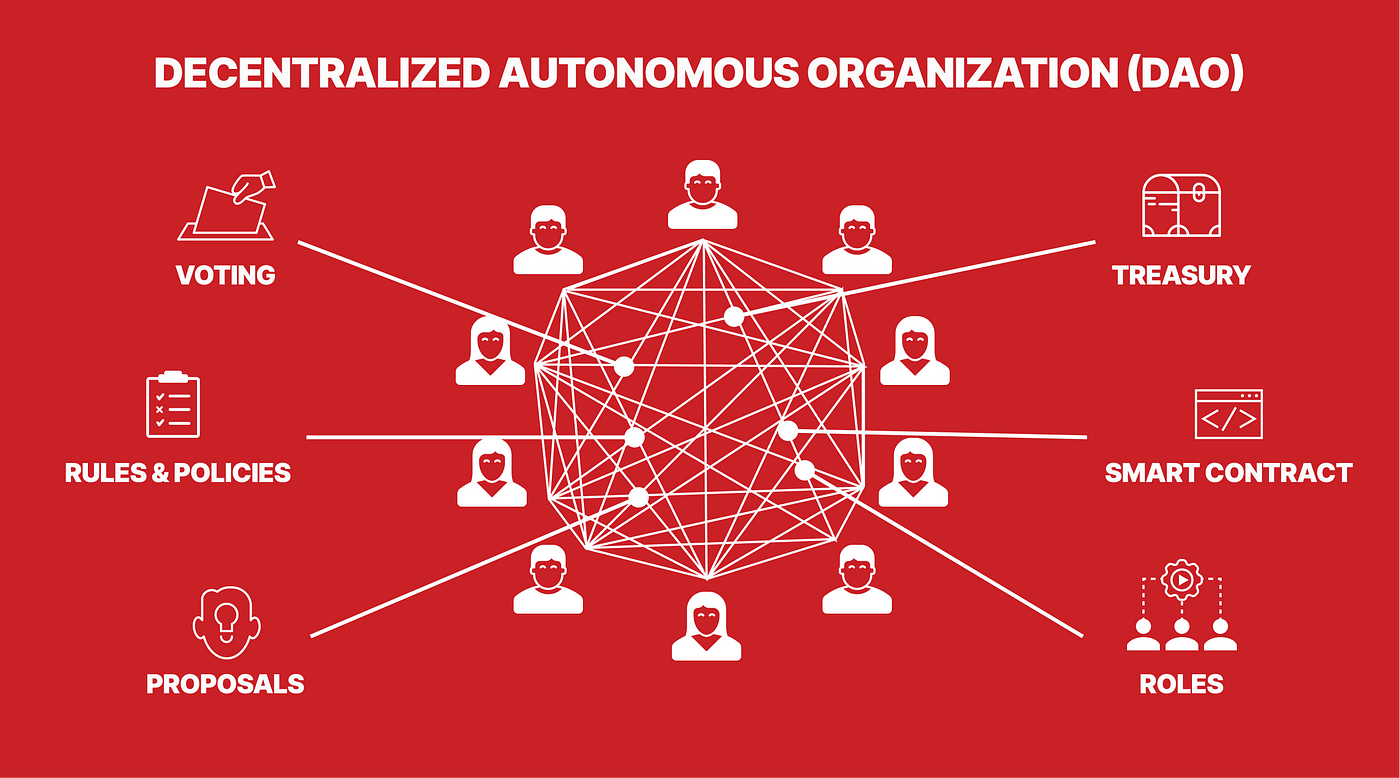
To address potential plutocracy in voting, whereby wealth dictates influence in voting, DAOs use mechanisms such as quadratic voting, which make it harder for single, heavily invested entities to dominate governance (Lustenburger et al. 2025). In other words, the cost of voting increases quadratically with the number of votes. This means it becomes increasingly expensive for one person to dominate a decision, giving more balanced power across the community. This alleviates the risk of vote-buying or off-chain collusion by influential stakeholders, which could sway funding decisions away from pure scientific merit (Caravello 2025).
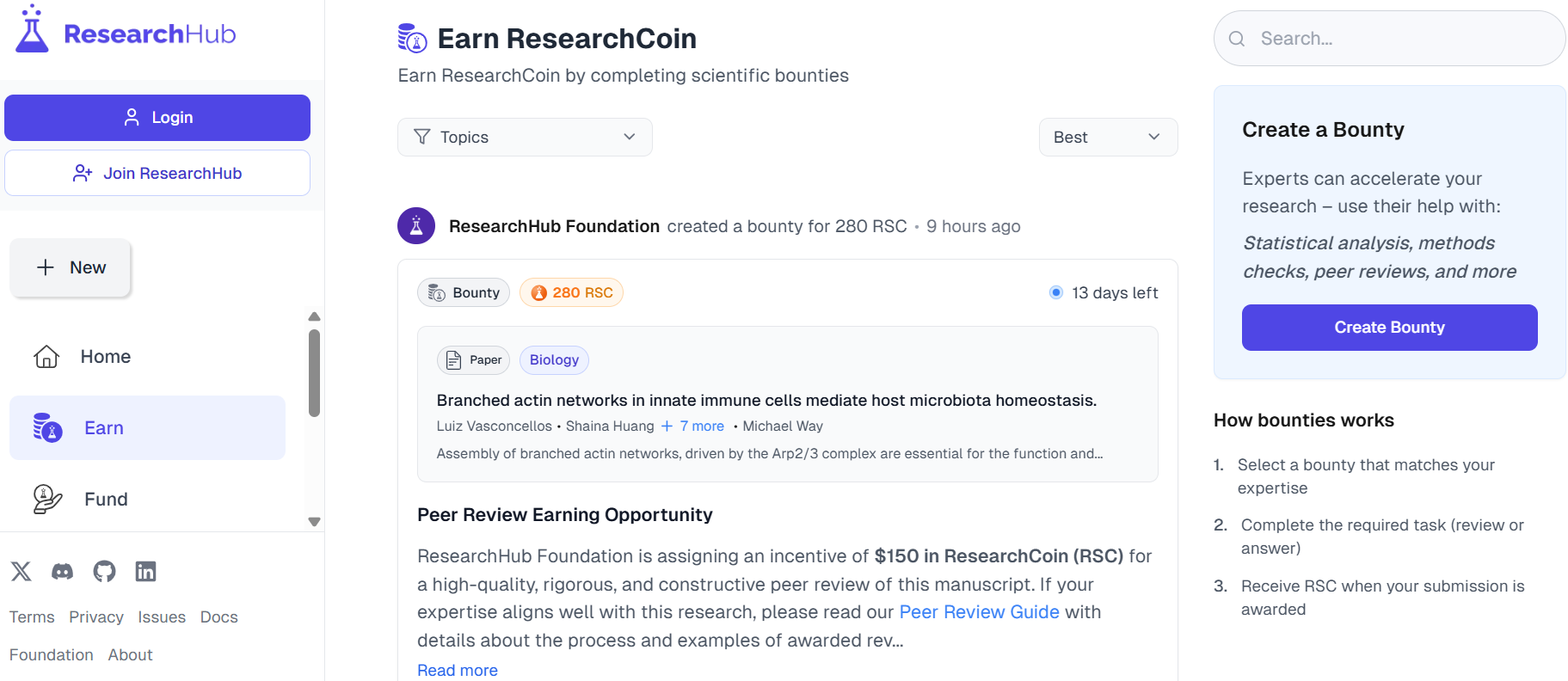
In terms of meritocracy, DeSci platforms offer on-chain reputation systems, such as ResearchHub's Reputation (REP) score. These systems reward diverse scientific contributions, which create verifiable track records independent of institutional affiliation and thus incentivise valuable community participation. Complementing this, direct tokenised incentives, like ResearchHub's ResearchCoin ($RSC), offer a monetary reward for specific actions such as peer-reviewing or sharing reproducible research, contributions which are often undervalued and under-incentivised in traditional models.
Although promising, DeSci comes with its challenges and, by existing on the blockchain, it presents potential risks absent in traditional models. Within DAOs themselves, low participation and voter apathy are persistent concerns across the broader DAO ecosystem, and DeSci is not immune (Caravello, 2025). Many DAOs struggle with active voter participation rates that can be as low as 5-10% of token holders for important protocols (Lukacs et al. 2023) can severely undermine the credibility of funding rounds, while the voting mechanisms, although decentralised, can be slow. Moreover, DAO members voting on funding may not possess the specific scientific expertise needed to accurately assess complex proposals, albeit those disinterested in longevity would likely care about funding it. Lastly, the volatility in prices of governance tokens such as the aforementioned $RSC makes long-term budgeting for research projects highly uncertain for scientists.
Section 2: Realigning Knowledge Dissemination Incentives
Traditional scientific publishing suffers from systemic incentive misalignments that limit research accessibility, inflate costs, and exacerbate the reproducibility crisis. This issue stems not from the aforementioned pitfalls of prestige-based funding but rather from prestigious publishing houses themselves. The career progression of an academic disproportionately rewards publication in high-prestige, frequently paywalled journals, enabling large publishers to form an oligopoly. Deutsche Bank describes it as a "triple payment" system where public funds support the initial research, compensate researchers and peer reviewers, and then public institutions and individuals pay again to access the published findings. Nearly two decades ago, major academic publishers in the science, technical, and medical sectors were already reporting substantial annual revenues of around $20 billion - a figure that would be significantly higher today. Profit margins for some publishers like Elsevier are reaching nearly 40%, exceeding Microsoft, Google, and Coca-Cola (Becerril-García, 2024). Journals charge exorbitant fees, with Nature requiring $11,000 (Oransky and Marcus, 2021) and The Lancet Global Health charging up to $7,000 per paper published (Lancet, no date), beyond any subscription costs.
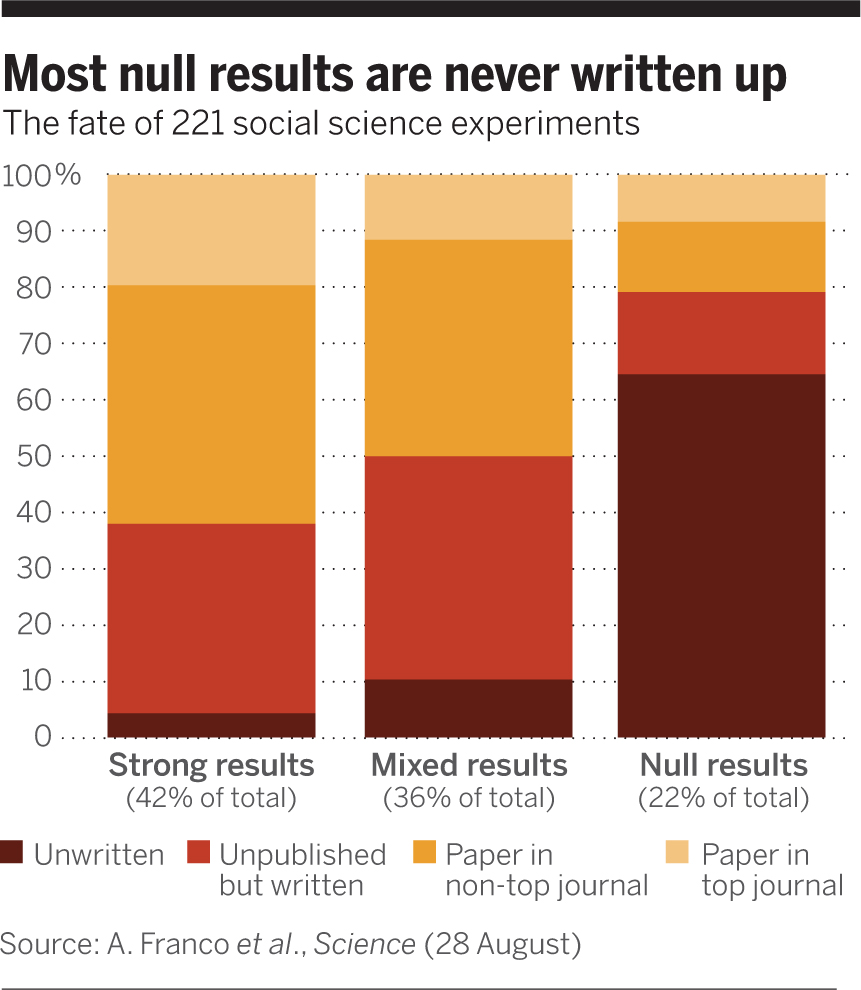
The competitive pressure to secure publications in highly selective journals can inadvertently compromise scientific integrity. This system fosters bias toward publishing exclusively positive or ostensibly novel results, leading to the underreporting of null or negative results, despite their importance to scientific process. In more severe instances, these pressures have been implicated in research fraud, where photoshopped dementia results led to $34 billion in funding being misdirected away from discovering a treatment for over two decades (OHA, 2025). Yet, this should not be surprising, considering that 70% of scientists cannot reproduce another researcher's results, highlighting the corruption in science (Baker, 2016).
DeSci offers mechanisms designed to fundamentally realign knowledge dissemination incentives, cultivating a research ecosystem that is inherently more open, transparent, and collaborative. DeSci initiatives champion Open Access Platforms and Decentralised Repositories, exemplified by projects like ResearchHub, coined the "GitHub for science." These platforms aim to dismantle paywalls and circumvent profit-extracting intermediaries, such as Nature and Science, by facilitating direct sharing of research results, methodologies, datasets, preliminary findings, and preprints, making them accessible to the global scientific community.
Complementing this infrastructural shift, DeSci promotes incentivised collaboration and openness throughout the research lifecycle, rather than confining peer interaction to pre-publication review. Scientific contributions often overlooked in academia, such as null results, replication studies, and the creation of analytical tools, can be directly rewarded on DeSci platforms (e.g. ResearchHub) through platform-specific tokens. This model encourages sharing all research outputs regardless of their perceived "publishability" in conventional journals. Publications on these platforms can evolve dynamically, allowing updates with new data and corrections.
Despite compelling advantages, established journals have oligopolised the academic incentive structures, presenting adoption barriers for DeSci platforms. While platforms like ResearchHub demonstrate potential with 850 weekly contributors, achieving comparable credibility remains challenging. Additionally, DeSci platforms must navigate evolving regulatory landscapes while avoiding new biases that might favour research popular in online communities over complex fundamental science or inadvertently exclude researchers less familiar with the requisite technology.
Section 3: Realigning Translation & Impact Incentives
The journey from laboratory discovery to commercial application faces a "valley of death" in translational research. For context, 90% of drug candidates entering clinical trials fail FDA approval (Millar, Hill and Whelan, 2022). Developing a single drug takes approximately 10-15 years and $2.6 billion, a 145% increase from early 2000s estimates (Le et al., 2020 & Waltman and Larivière, 2021)
The valley of death stems from misaligned academic incentives, rewarding publications, citations rather than the translation of discoveries into applications. Seyhan (2019) argues that the lack of appropriate incentives in academia to pursue the translation of discoveries into clinical innovations contributes to extremely low success rates. Empirical research by Qing Ke (2019) demonstrates that clinical research papers consistently receive significantly fewer citations compared to basic science publications - a proxy for the academic rewards that drive researchers' careers and recognition. This citation disparity creates powerful disincentives for pursuing translational work despite its huge societal importance.
DeSci utilises the technology of blockchain to provide transparent pathways from discovery to application. IP-NFTs (Intellectual Property Non-Fungible Tokens) serve as immutable digital certificates of ownership on-chain, creating verifiable IP records manageable through smart contracts. Smart contracts self-executing pieces of code that live on the blockchain; once certain pre-agreed conditions are met - such as a product reaching a sales milestone - the smart contract automatically carries out the defined terms of an agreement without needing a traditional intermediary. This model allows for fractional ownership, allowing researchers to raise capital without ceding complete control of their research (Shilina, 2023). In addition, smart contracts can streamline licensing agreements by automatically connecting researchers with commercial partners and removing bureaucracy in the drug-approval process (Boicova-Wynants, 2022). Most importantly, embedded smart contracts can distribute royalties to researchers and contributors when commercial milestones are achieved, such as bringing a product to market or when a certain sales goal is reached, creating incentives aligned with translation outcomes rather than just academic metrics (Białas, 2025).
DeSci DAOs, such as HairDAO for hair loss, VitaDAO for longevity, or even PsyDAO for medical psychedelic research, offer a promising solution to the translational "valley of death". These DAOs have mission-driven research communities that target specific medical challenges or disease areas (Shilina, 2023). Unlike traditional research institutions with broad mandates, these specialised DAOs concentrate resources, expertise, and funding directly on a single issue (Lee, 2023). This targeted approach breaks down silos between academic researchers, clinicians, patients, and industry partners by uniting them within a governance structure that aligns incentives toward translational outcomes. By combining domain-specific focus with transparent funding allocation and milestone-based rewards embedded in smart contracts, DeSci DAOs can strategically direct collective resources toward bridging critical gaps in the translational pathway that traditional institutions often neglect due to commercial uncertainty or misaligned academic incentives (Lopez, 2025).
Despite these promising frameworks, DeSci's approach faces implementation challenges. IP-NFTs exist in uncertain regulatory territory, raising questions about their legal status across jurisdictions (Białas, 2025). Tokenised IP also risks introducing commercialisation challenges if governance structures around it are inefficient, potentially stalling R&D (Lopez, 2025). Additionally, blockchain-based IP management faces adoption barriers as many researchers and institutions lack the technical expertise to navigate on-chain systems and smart contracts, making it difficult to integrate practically into the existing academic infrastructure (Białas, 2025).
While DeSci addresses legitimate pain points in translational research, its effectiveness depends on thoughtful implementation that preserves scientific integrity, ensures equitable access, and maintains support for the full spectrum of research from fundamental inquiry to practical application.
Conclusion
The misaligned incentives entrenched within the system of traditional science demonstrably impede progress across research funding, knowledge dissemination, and the translation of discoveries into tangible, real-world impact. Current frameworks often prioritise administrative burdens over efficient resource allocation, foster paywalled publishing oligopolies detrimental to open access, and perpetuate the valley of death, thereby fostering inefficiencies and biases. DeSci emerges as a novel paradigm proposing the recalibration of these incentives through blockchain-based mechanisms such as DAOs, tokenised rewards, and IP-NFTs. These tools aim to cultivate a more democratic, transparent, and efficient scientific enterprise.
However, while offering compelling solutions to long-standing issues, DeSci confronts significant implementation challenges. Concerns regarding robust DAO governance, including voter apathy and plutocracy, the volatility of crypto-assets, the uncertain legal and regulatory landscape for tokenised IP, and barriers to widespread adoption within the established scientific community must be addressed. The ultimate success of DeSci in transforming scientific practice hinges on its capacity to rigorously navigate these complexities. Further research and careful, iterative development are crucial to ascertain whether DeSci can mature into a superior model for advancing scientific discovery and application.
Reference List
Al-Shahi Salman, R., Dennis, M.S. and Sandercock, P.A.G. (2014) 'Research misconduct: time for a united approach', Nature, 533(7603), pp. 452–453. Available at: www.nature.com/articles/533452a (Accessed: 5 June 2025).
Azoulay, P., Graff Zivin, J.S. and Manso, G. (2011) 'Incentives and creativity: evidence from the academic life sciences', The RAND Journal of Economics, 42(3), pp. 527–554.
Białas, P. (2023) How Decentralized Science (DeSci) Is Revolutionizing Research. Ulam Blog, 21 February. Available at: www.ulam.io/blog/how-decentralized-science-is-revolutionizing-research (Accessed: 5 June 2025).
Boicova-Wynants, A. (2022) Research project: NFTs in IP Strategy of a Company. IP Business Academy. Available at: ipbusinessacademy.org/research-project-nfts-in-ip-strategy-of-a-company (Accessed: 5 June 2025).
Bol, T., de Vaan, M. and van de Rijt, A. (2018) 'The Matthew effect in science funding', Proceedings of the National Academy of Sciences, 115(19), pp. 4887–4890.
Butler, D. (2008) 'Translational research: Crossing the valley of death', Nature, 453(7197), pp. 840–842.
Caravello, A. (2023) DAO Voting Confidence is in Decline. How to Restore it? Shutter Network Blog, 21 December. Available at: blog.shutter.network/dao-voting-confidence-is-in-decline-how-to-restore-it/ (Accessed: 5 June 2025).
Greed Academy (2023) Governance. Medium, 12 March. Available at: medium.com/@GreedAcademy/governance-623612c5707d (Accessed: 5 June 2025).
Herbert, D.L., Barnett, A.G., Clarke, P. and Graves, N. (2013) 'On the time spent preparing grant proposals: an observational study of Australian researchers', BMJ Open, 3(5), e002800.
Ke, Q., Ahn, Y.-Y. and Sugimoto, C.R. (2019) 'A systematic identification of scientific disciplines' orientation toward basic or applied research', Journal of Informetrics, 13(1), pp. 383–394.
Larivière, V., Haustein, S. and Mongeon, P. (2015) 'The Oligopoly of Academic Publishers in the Digital Era', PLoS ONE, 10(6), e0127502.
Lee, J.Y. (2023) 'Decentralized Autonomous Organizations (DAOs) Unchained: A New Form of Corporate Governance?', University of Illinois Law Review, 2023(4), pp. 1293–1348. Available at: illinoislawreview.org/wp-content/uploads/2023/08/Lee.pdf (Accessed: 5 June 2025).
López-López, A.V., Navas-Martín, M.Á. and Larrú-Rupérez, L. (2024) 'Decentralized Science (DeSci): An Exploratory Study of Its Possibilities in Open Science', Laws, 13(4), p. 131. Available at: doi.org/10.3390/laws13040131 (Accessed: 5 June 2025).
Lukacs, M., Pinter, N., Rožon, R. and Pólvora, A. (2023) Opportunities and Limitations of Decentralization in Decentralized Science. Preprint. Available at: www.researchgate.net/publication/373824086_Opportunities_and_Limitations_of_Decentralization_in_Decentralized_Science (Accessed: 5 June 2025).
Lustenburger, et al. (2025) [Article on quadratic voting in DAOs]. Supposedly Applied Sciences, 15(7), Article 3491.
OHA Editorial Team (2025) The Alzheimer's Research Scandal. Occupational Health Assessment, 10 February. Available at: occupationalhealthassessment.com/2025/02/10/the-alzheimers-research-scandal (Accessed: 5 June 2025).
Seyhan, A.A. (2019) 'Lost in translation: the valley of death across preclinical and clinical divide – identification of problems and overcoming obstacles', Translational Medicine Communications, 4, article number 18. doi: 10.1186/s41231-019-0050-7.
Shilina, S. (2023) Intellectual property (in science): The potential & advantages of NFTs. Preprint. Available at: www.researchgate.net/publication/369952984_Intellectual_property_in_science_The_potential_advantages_of_NFTs (Accessed: 5 June 2025).
Wager, E. and Kleinert, S. (2014) 'Why science needs standards of evidence', Science, 345(6200), pp. 1210–1211. Available at: www.science.org/doi/10.1126/science.1255484 (Accessed: 5 June 2025).