Bet Sizing, Utility Functions, and SBF Revisited
It is Sunday 13th February 2022. Sam Bankman Fried (SBF), CEO of FTX, then the third-largest cryptocurrency exchange, is on top of the world. Having just closed at a $32bn Series C valuation only 3 years after being founded, the first ever Superbowl Ad by a crypto company aired to 99 million viewers, featuring Larry David and Tom Brady.
Just 9 months later, all that remained were the smoking embers of a multi-billion dollar empire and the legal documents of a Chapter 11 Bankruptcy notice. But how did it all come crashing down so fast? And how indeed did FTX grow so big in the first place?
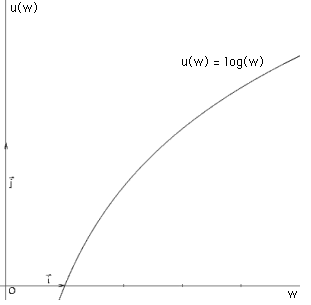
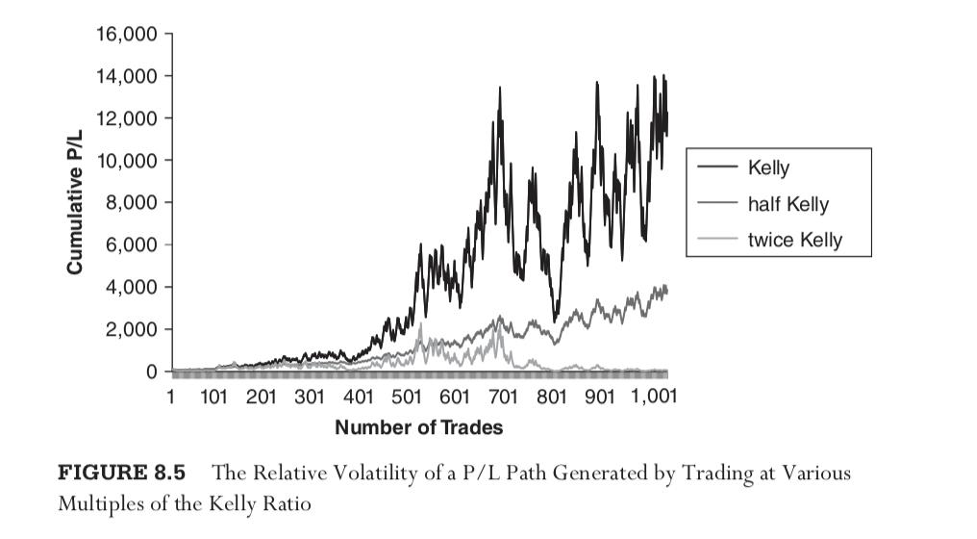
For context, let's look at SBF's twitter activity. In December 2020, he posted a thread entitled "Better is Bigger", in which he poses a bet: you have a 10% chance of winning, and if you win, you multiply your bet size by 10,000. With a hypothetical bankroll of $100,000, the Kelly Criterion, a formula designed to maximize the long-term geometric growth rate of capital, would suggest betting around $10,000. SBF, on the other hand, would "probably do more like $50k". He justifies this by saying that it all comes down to utility functions - how individuals value their own money. Most people's utility decreases as wealth increases - what does $100,000 more buy someone with a net worth of $1bn? This is a logarithmic function that can be expressed by U(W)=log(W), where U is utility and W is wealth.
SBF argued that his personal utility function was "closer to linear" (straight line up and to the right) because his primary goal was altruistic donation. For him, "twice as much money means I can save twice as many people", suggesting a constant value for each additional dollar aimed at global good. These views are hallmarks of Effective Altruism, a controversial utilitarian philosophy, of which SBF was a public supporter.
However, this framework, which fueled FTX's absurdly fast rise, was critically, and indeed mathematically flawed. SBF viewed the Kelly Criterion as being a mere suggestion dependent on one's utilitarian outlook and risk tolerance. Far from this, it represents the bet size that maximises the long-term geometric growth rate of capital. In this way, betting more than Kelly, as SBF proposed, doesn't just increase risk; it actively decreases the expected long term growth rate and significantly elevates the probability of ruin. His assertion that a logarithmic utility function was in general "reasonable" ironically points directly to Kelly as an optimal ceiling, not a baseline to be exceeded due to personal utility preferences.
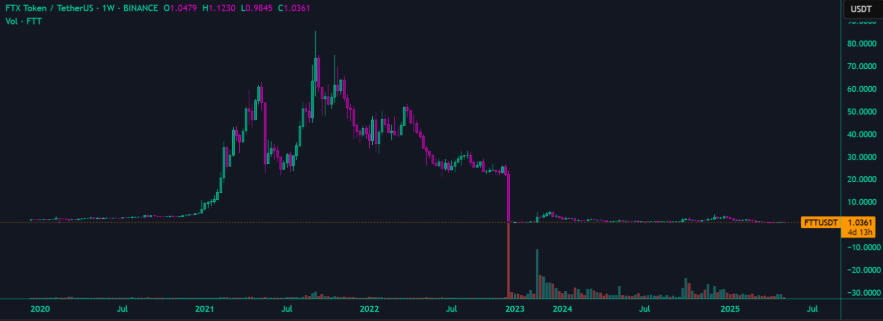
Indeed, this misunderstanding of risk wasn't just philosophical. It was operational. The eventual reveal that they had been raising capital using their own issued token, FTT (shown in the chart above), as collateral, the supply of which they largely controlled, reflected a culture that prized exponential growth above all else.
This attempt to sidestep Kelly misses the concept of ergodicity, as Pearson highlights in his interpretation of the St. Petersburg Paradox. In decision theory, there's a critical distinction between ensemble averages - what happens across many parallel universes or simulations - and time averages - what happens to a single individual making repeated decisions over time. The Kelly Criterion, then, solves for the latter, maximizing long-term compounded growth while avoiding ruin.
SBF's framework, by contrast, implicitly optimized for ensemble averages, focusing on high 'expected-value' outcomes without accounting for the cost of ruin. This oversight meant that while his bets looked attractive in theory, they were mathematically and practically unsound for real-world decision-making, where you only get one life and one bankroll. A strategy that occasionally offers vast returns but frequently results in ruin is, to any sane person, far from optimal.
The extent of SBF's belief in this system was captured succinctly during the court testimony of Caroline Ellison, a former executive at FTX: "[SBF] would be happy to flip a coin if it came up tails and the world was destroyed, as long as it came up heads the world would be like more than twice as good." But no matter how good the upside, repeating such a bet guarantees destruction. As the official Kelly Criterion blog puts it, SBF thought a bet that has a 100% chance of destroying the Earth was worth taking. Maybe it shouldn't come as a surprise that his empire came crashing down, after all. The signs were there…
Moreover, his assumption that "twice as much money means I can save twice as many people" fails to recognise that power laws exist here too. The marginal utility of capital in charitable giving is not linear - it is also logarithmic. Your first million may save thousands of children from malaria. Your hundredth million might fund a think tank's sixth white paper on AI risk. The impact curve flattens fast. Like in most things, in order to scale, the bottleneck isn't money - it's talent, coordination and diminishing returns.
The point of this article, though, is not to slate SBF's decision making. I assure you, that has been done to whit's end by the over 2 million customers financially ruined by his endeavours (can you tell I was one of them?). The point is rather that, despite being ridiculous, SBF's philosophies are highly interesting, and one can do well to learn from his mistakes and extrapolate them to one's own life. So, is it inherently wrong to swing for the fences?
I don't think so. Taking big swings, especially early on when the downside is limited and the lessons can be formative, is a common theme in the stories of some of the world's most successful people. But FTX's story is a reminder that complete rashness, without an understanding of risk, and indeed moral blast radius, for want of a better term - harming millions of lives in the process of enacting one's hubris - can be destructive.
So do take calculated risks, but be thoughtful about sizing them. Use frameworks, but don't become enslaved by them. Accept that you might be wrong. Protect your downside. To use a Formula 1 analogy, remember that good brakes - not just raw acceleration - are what get you through the sharpest turns. SBF didn't fail because he shot for the stars; he failed because he believed he was invincible.