Attention: The New Asset Class
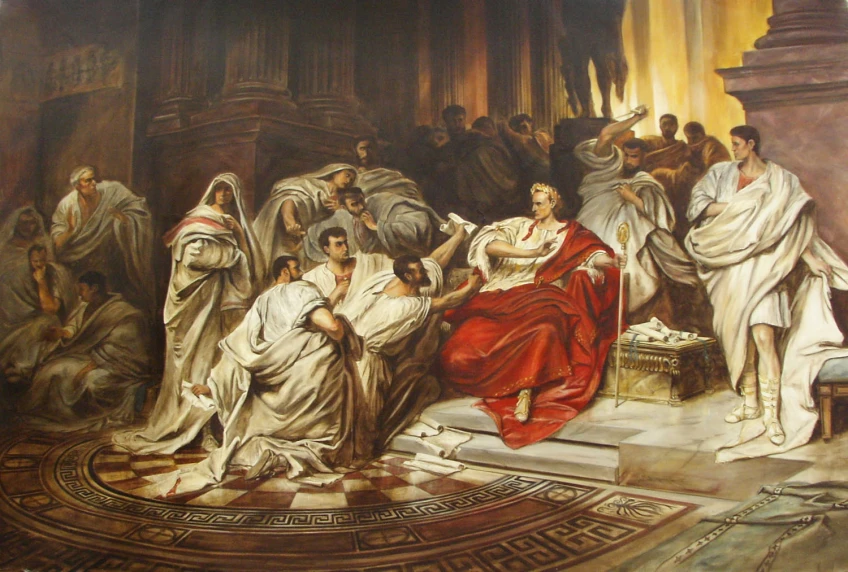
Attention has always been a resource. In Ancient Rome, politicians, such as Pompey and Caesar, vied for public support by building the most extravagant monuments possible, attempting to capture the attention of the Roman public, who, they hoped, would vote in their favour as a result. However, with the dawn of the 'information age' brought about by the invention of computers and other digital systems, the value of our attention has skyrocketed. Everyday the average person is bombarded by a 'supersensorium' (h/t Erik Hoel for the coinage) of content from a variety of different platforms and influencers all aiming to capture your attention.
Many of the social media platforms that drain so much of our screen time have the illusion of being 'free', and that much may be true in monetary terms. But really we pay with our attention (which has a $ value). How do these companies monetize our attention? By acting as the intermediary between their user's attention and businesses with something to sell. Advertisers have long sought to capture attention of potential buyers, traditionally in 30-45 second TV slots, which were then whittled down to 15 second YouTube ads, and now, as a recent conversation with a Media Director revealed, 6 second TikTok ads. This trend reflects in plain view this increased attention value - what was worth 30-45 seconds of a viewer's attention 10 years ago is now worth 6 seconds in today's world. Attention is valuable, and becoming more and more scarce as the competition for said attention increases. And what is to say this trend won't continue?
In crypto, the financialisation of attention is taking place in real time, to the extent that it is becoming tradeable. Just as Andrew Tate became the third most searched human on earth in 2023 by yelling the most controversial and morally reprehensible (and, by extension, attention garnering) statements from the digital rooftops, so too does the success of a memecoin reflect the virality, and therefore perceived worth of said piece of information in the collective consciousness. Andrew Tate, however abhorrent you find his values, is a genius marketeer who knew that his success as an influencer relied on his ability to garner clicks, eyeballs and attention. Attention is the digital currency for the internet. "There is no such thing as bad marketing", a wise man once said.
It is easy to dismiss memecoins as a symptom of excessive market froth. However, I posit that we are seeing the emergence of an entirely new asset class - attention. Assets in traditional finance trade on the basis of future expected valuations, primarily on the premise of fundamentals - earnings, personnel, leverage ratios… the list goes on. Emerging crypto assets trade on the basis of future memetic potential - ie the future value of a piece of information in the collective conscience.
Everyone has heard of DogeCoin. Why? Because the idea that an intrinsically worthless, utility-less asset, centered around the Shiba-Inu dog meme, should be worth $50bn is utterly preposterous. And yet, it is this very ridicule that drives the memetic flywheel. As more and more people express their outrage at such an insult to the financial bedrock of the Western World and more and more headlines are written, the more attention it garners and the larger staying power it has in the collective conscience. Now, clearly not all memecoins have a Market Capitalisation of $50bn. Dogecoin has the advantage of being a first mover in that regard, having been launched in 2013 and having survived multiple cycles.
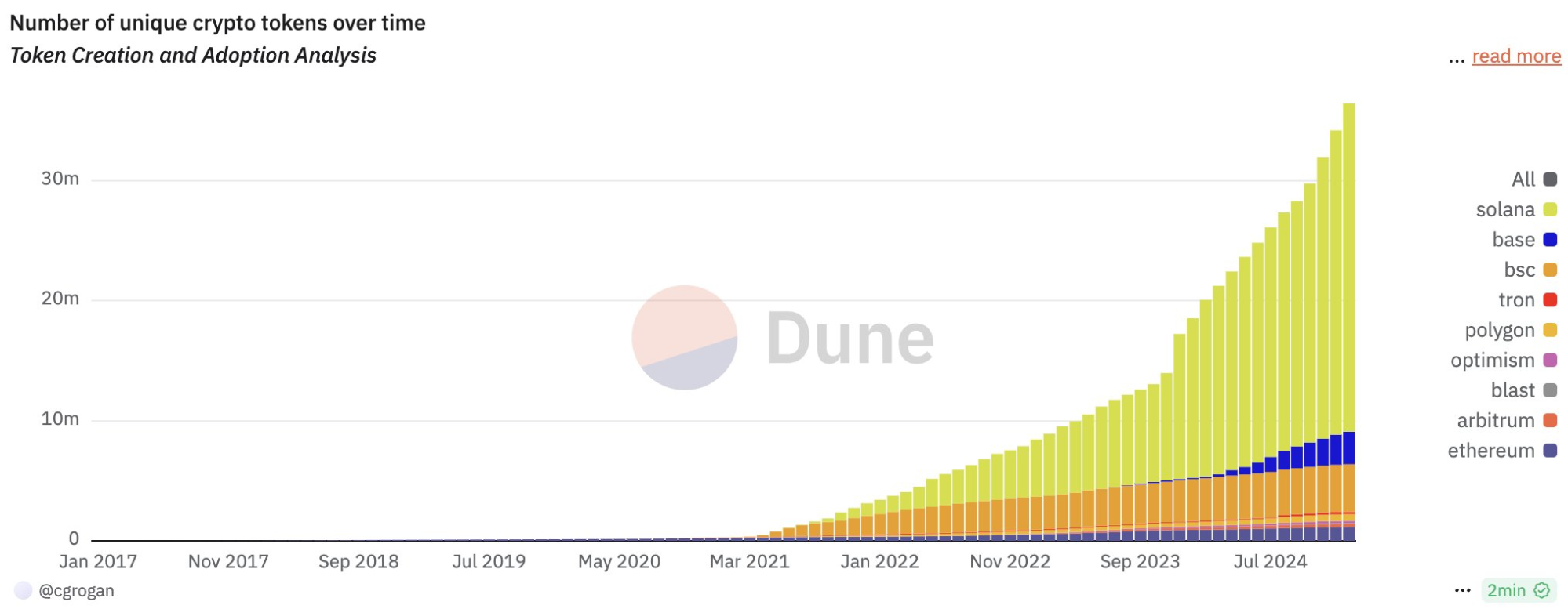
The current state of memecoins has been heavily influenced by the development of Pumpfun, which allows users to create tokens on the Solana Blockchain without any prior coding knowledge. This has facilitated an explosion in the number of tokens available, creating a massive dispersion in the available venues for attention to turn. Just as the competition for your attention has increased drastically on social media, so too is it increasing in the crypto sphere.
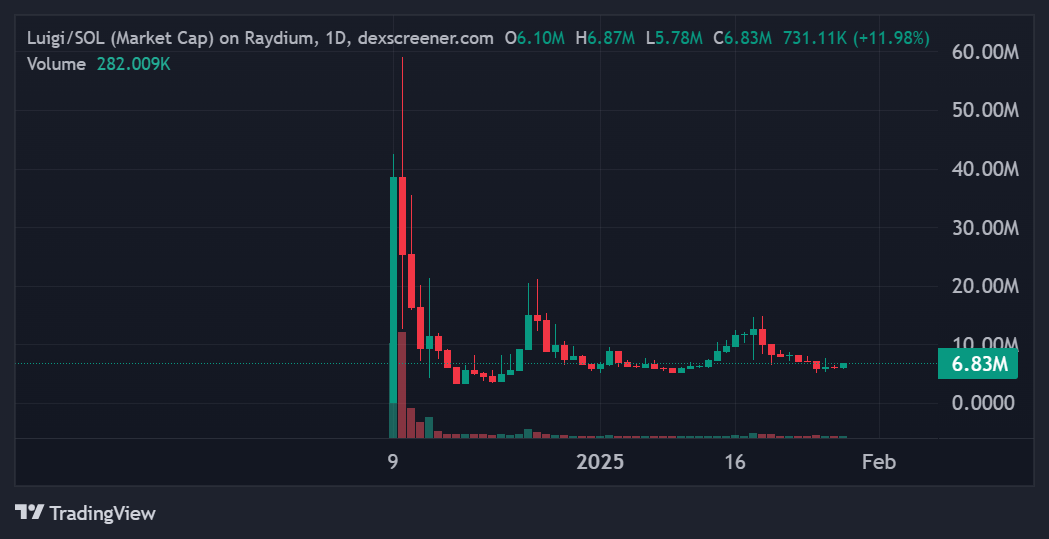
Memes (read: information, ideas), through the power of network effects and memetics, vie for attention and by extension for staying power within the collective conscience. Only once that is achieved can attention reflow rather than simply die out altogether. For example, Luigi Mangione was suspected of assassinating Brian Thompson, CEO of UnitedHealthcare, on 4th December 2024, and was revealed as a suspect on the 9th December (spot this on both charts below). You can see that the price of the memecoin loosely mirrors the attention patterns as denoted by the trends chart.
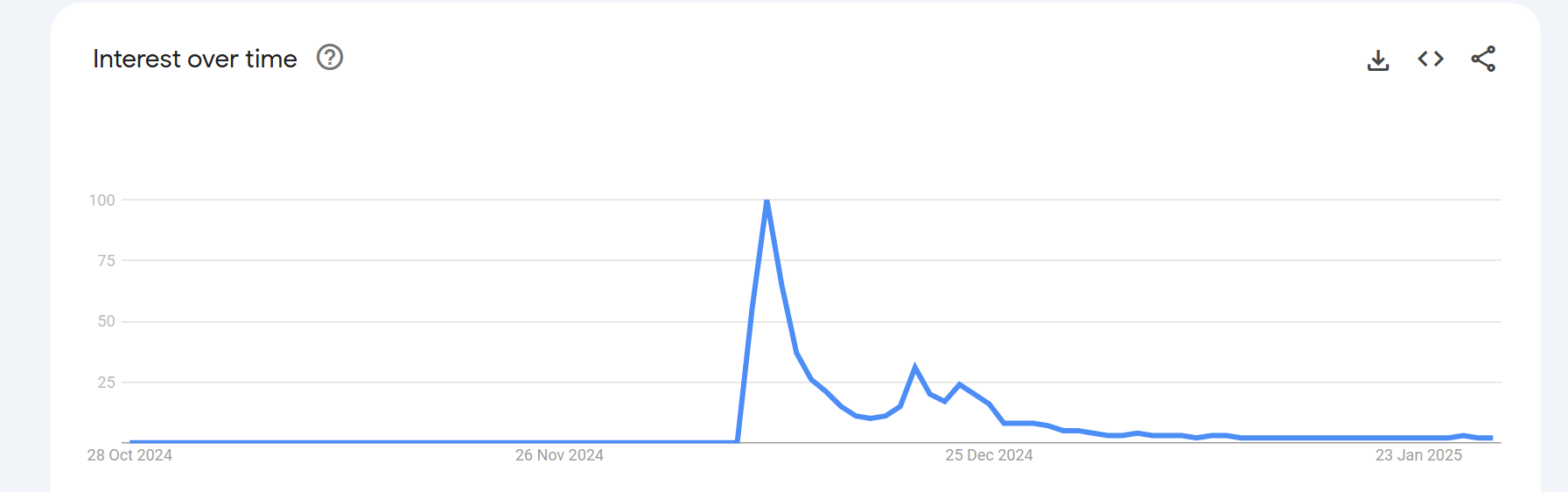
Luigi is an example of a meme with no staying power. This is not to say that the issue is not important, but rather that the value of 'Luigi Mangione' in the collective conscience is not particularly high. So, how does one profit in the age of attention? Well, just as one would profit in the age of 'fundamentals' - by using information asymmetry as an advantage. If you deem a certain stock to be undervalued relative to its fundamentals, you would aim to buy it. It follows then that if you believe a meme to have a high attention rate and a high potential of gaining staying power in the collective conscience but is undervalued relative to other memes of similar stature, therein lies an opportunity.
Now, I'm by no means claiming that you should shove all-in a Bad Bunny coin because you've seen him trending on tiktok, but rather that these markets are challenging, interesting and rewarding rather than a giant ponzi scheme masquerading as the future of finance. It's better to approach these markets with curiosity and an open mind, recognizing their potential and complexity, rather than dismissing them as mere fads—especially as they continue to grow and reshape the financial landscape.